Different stories.
One release engine.
The question changes with the cut. The connection between context, evidence, editorial action and human approval stays intact.

Keep the audience guessing.
Does the campaign reveal who comes back?
A trailer, a social cut and a press quote can give away more together than any one asset alone.
Connect approved campaign context. Inspect the reveal. Give the editor a precise note.

Keep the emotion. Check the conditions.
The scene works. Is the music cleared for this release?
A moving reunion lands on the perfect cue. The campaign then expands into a channel outside the documented clearance.
Review the cue against supplied rights evidence. Carry the open condition through the revision.
Inspect a stored product example
Separate Eclipse Protocol synthetic demo. Stored analysis and simulated decisions; not a result for this genre scenario.
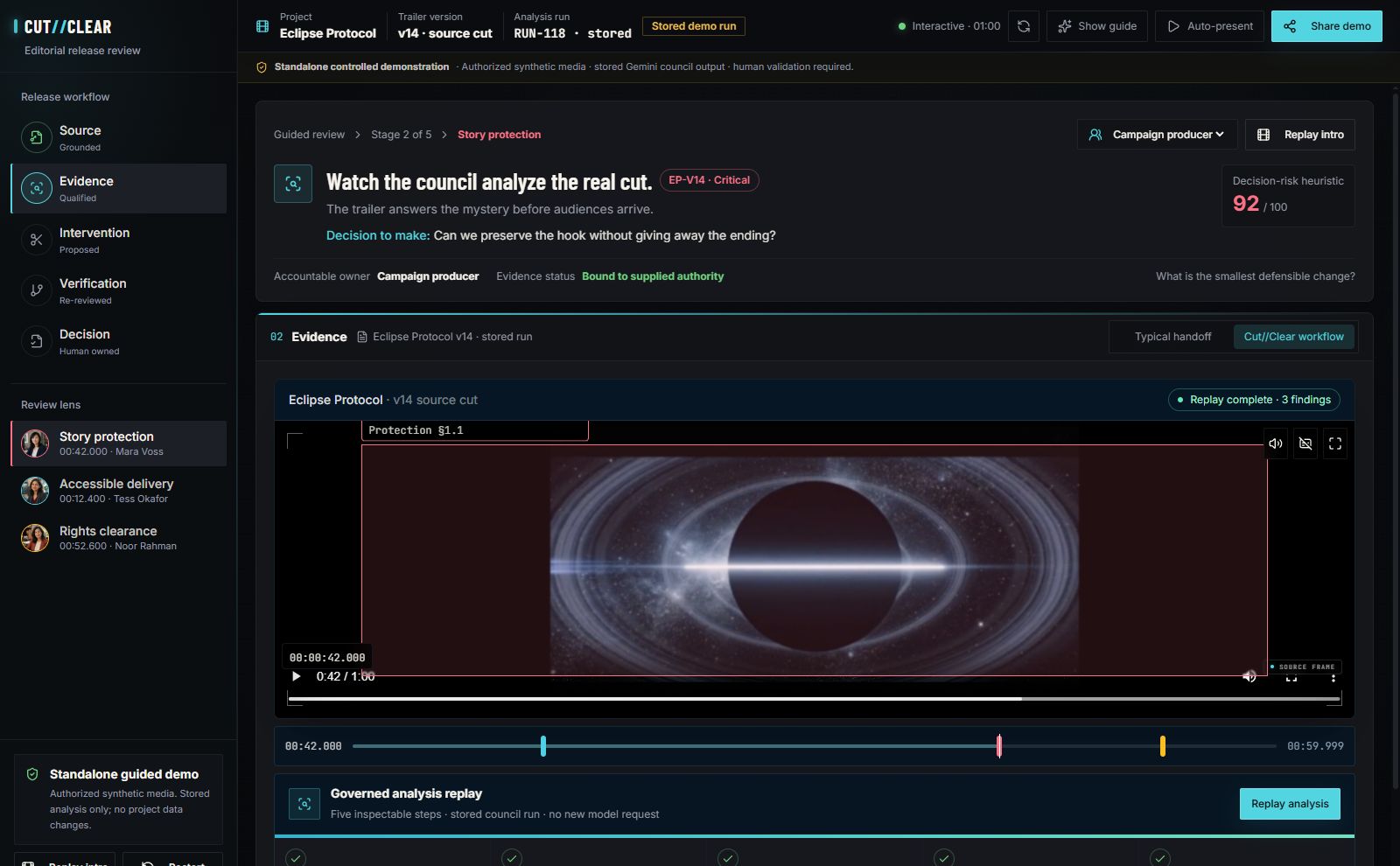

Let the story stand up to scrutiny.
Does the trailer’s claim have the evidence behind it?
An interview becomes a bold headline. The final wording needs to stay faithful to the source and its qualifications.
Connect the claim to its supporting material. Inspect the wording, context and readable qualification.
Inspect a stored product example
Separate Eclipse Protocol synthetic demo. Stored analysis and simulated decisions; not a result for this genre scenario.
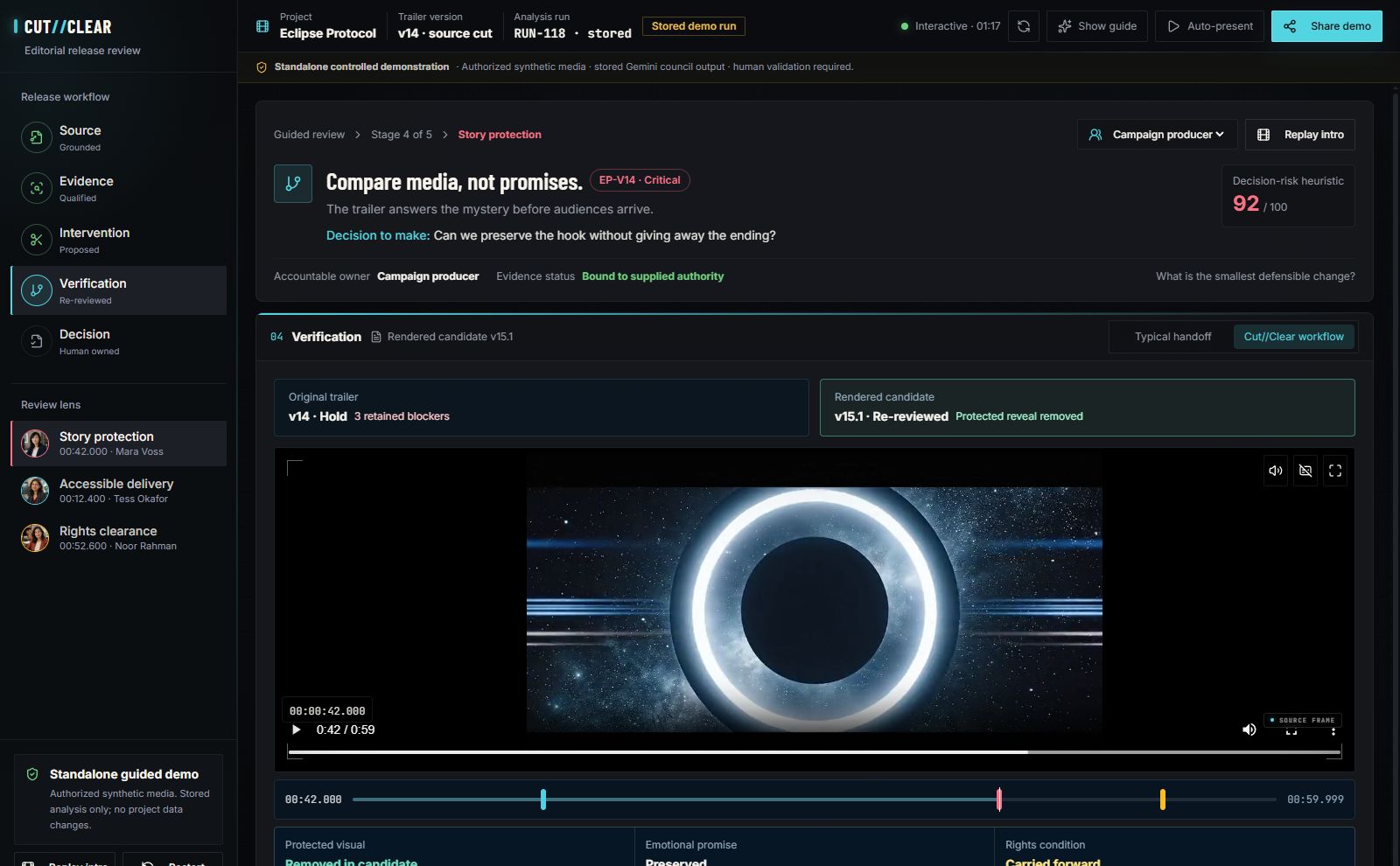

Make every version tell the right story.
Does the vertical promo still carry the line?
A family adventure becomes a mobile campaign. A different crop can change what the audience sees—and which captions they can read.
Review the rendered target version, then check the revision and record the approved release scope.
Inspect a stored product example
Separate Eclipse Protocol synthetic demo. Stored analysis and simulated decisions; not a result for this genre scenario.
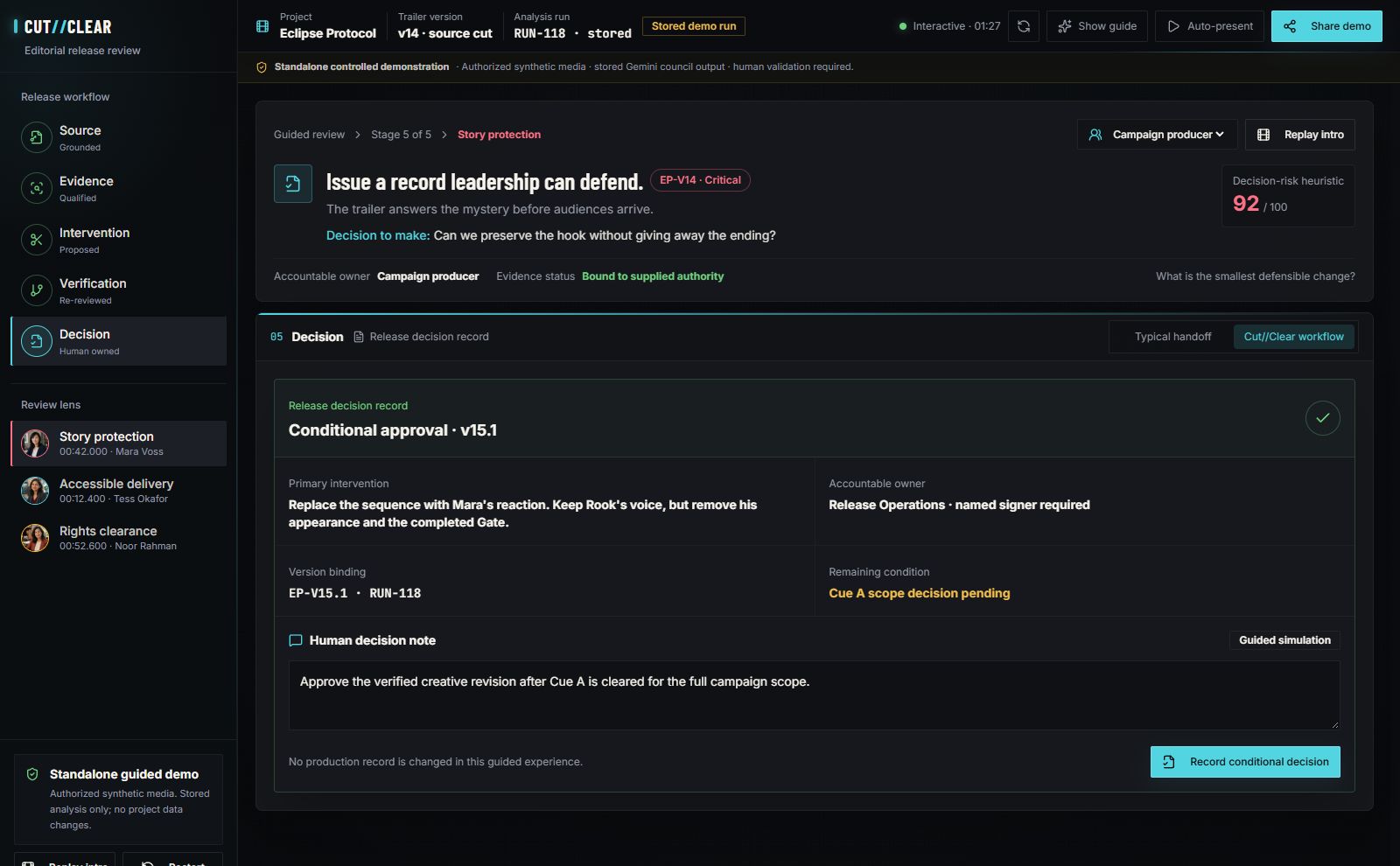
Genre stories illustrate review questions, not completed analyses. AI recommendations support human judgment. Rights, claims and release decisions remain with authorized reviewers.
The work around
the final cut.
Supporting capabilities keep the creative, operational and governance records connected.
Editorial collaboration
Keep the review in the room.
Frame annotations, comments, assignments and live review sessions keep feedback attached to the project, review run and version. Expiring, revocable client review links support configured access and decision receipts.
Editor handoff
Carry the note into the timeline.
CSV findings and markers, FCPXML, EDL, and VTT/SRT notes support editorial handoff. The Premiere UXP panel and Resolve utility require setup and acceptance testing on the customer’s workstation; interchange fidelity must be validated.
Stakeholder evidence
Give the decision a record.
Evidence reels and Finding Replay Reel help explain a finding and its requested action. Review records, human disagreement and approval packages preserve the reasoning. A presentation artifact is not an approval.
Governance & advisory records
Keep the conditions attached.
Consent and digital-likeness permissions, vendor assessments, control mappings, privacy records and formal exceptions support release governance. JuriSec advisory records extend this into scoped client assurance work. These are operating records, not legal advice or compliance certification.
Evaluation & operations
Measure what the pilot proves.
Model and prompt provenance, evaluation records, processing diagnostics and portfolio views make limitations visible. Pilot reporting tracks observed review time, findings, human dispositions and revision turnaround. Accuracy and savings need authorized evaluation data and verified baselines.
Keep the creative intent.
Make the decision inspectable.
Plan a controlled pilot Intake Review Revise Verify Approve